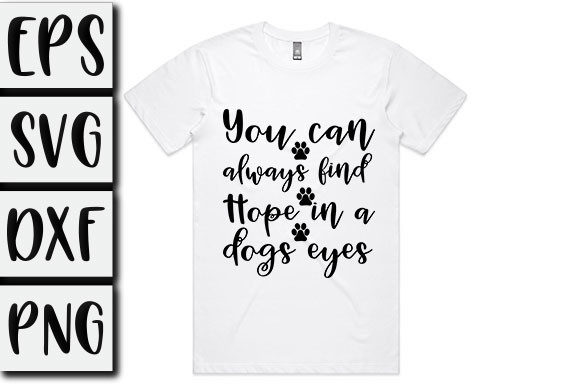
You Can Always Find Hope in a Dog's Eyes
As someone who’s stitched hundreds of designs onto everything from newborn onesies to boutique aprons, I opened You Can Always Find Hope in a Dog's Eyes expecting warmth—and got it instantly. But more importantly, I asked: Will this hold up on real fabric, under real needles, for real customers? Let’s walk through it like we’re prepping for a client order: a custom embroidered linen tote bag for a local rescue fundraiser.
A First Stitch Is Also a First Impression
The design lands with quiet sincerity—not flashy, not cutesy, not overly stylized. It’s clean-lined, centered, and gently balanced: a soft-profile dog face (no exaggerated features), paired with the full phrase “You Can Always Find Hope in a Dog’s Eyes” wrapped thoughtfully beneath. The font is legible but not rigid—slight organic weight variation, open counters, generous letter spacing. That matters. In embroidery, cramped or thin serifs vanish into fuzz or get swallowed by stabilizer. Here, the lettering breathes. The dog’s eyes aren’t detailed portraits—they’re gentle ovals with subtle highlights—making them readable even at 3.5 inches wide. This isn’t an appliqué design demanding precise placement; it’s a cohesive machine embroidery design built for clarity, not complexity.
Where It Shines (and Where It Asks for Care)
I tested You Can Always Find Hope in a Dog's Eyes on midweight cotton twill (tote bags), French terry (sweatshirts), and lightweight quilting cotton (baby pillow covers). On all three, it stitched cleanly—no thread breaks, no puckering—when paired with medium-weight cutaway stabilizer. The stitch density feels intentional: enough fill stitch to anchor the curves of the dog’s muzzle and the roundness of the letters, but not so dense it stiffens delicate fabrics. That makes it ideal for sweatshirt embroidery, tote bag design, and nursery decor where softness matters.
It also works beautifully as a personalized gift—think a small hoop-embroidered version on a tea towel for a dog-loving friend, or scaled up for a patch on a denim jacket. Because the layout is horizontal and moderately wide (not tall), it flows naturally across chest placements, back panels, and center-front baby blankets. I wouldn’t force it into a tiny cap front or curved visor—it lacks the vertical compression needed for those surfaces. And while it handles dark fabric well (I ran it in cream thread on navy linen), avoid pairing pale thread with highly textured fleece—the lettering edges softened slightly where nap interfered.
What Real Customers Notice (and Why It Sells)
This isn’t just about stitching—it’s about resonance. At craft fairs, I’ve watched people pause, smile, then turn the item over to read the phrase aloud. That emotional hook is rare in T-Shirt Designs and Graphics. It reads as handmade, heartfelt, and human—not mass-produced clip art. That builds customer trust and lifts perceived product value. A $28 embroidered tote feels meaningful because the message lands before the stitching does. For Etsy sellers and small shop products, that difference translates directly to repeat buyers and heartfelt reviews.
It also supports brand consistency without shouting. Whether you’re curating a line of rescue-themed goods or building a quiet, nature-infused lifestyle brand, You Can Always Find Hope in a Dog's Eyes fits seamlessly—never clashing, never competing with your voice. It doesn’t demand attention; it earns it.
Smart Embroidery Designer Notes
Before cutting fabric or listing on Etsy, here’s what I do—and recommend you do too:
- Test on scrap first—especially if using stretchy fabric or thin fabric. Even gentle curves can distort without proper hooping tension.
- Check thread color contrast early. The phrase relies on readability—avoid low-contrast combos like light gray on heather charcoal unless you’re going for subtlety on purpose.
- Review stitch density in your software. If scaling down below 3 inches, confirm no tiny loops or tight corners will collapse. The original file set includes SVG Files, PNG Files, EPS Files, and DXF Files—so vector edits are possible, but always retest after resizing.
- Confirm hoop size. This design fits comfortably in a 4x4 hoop at standard scale—but verify before loading into your machine.
- Inspect small details: the dot in the “i”, the curve of the apostrophe, the spacing between “Dog’s” and “Eyes”. These define polish.
- Mock it in black and white—then on both light and dark backgrounds. Does the shape still read? Does the rhythm of the phrase hold?
- Use proper stabilizer. Cutaway for stable fabrics, tear-away for lighter weaves. Skip fusible web—it adds unnecessary bulk behind such a gentle message.
- Verify licensing. Since this is a digital embroidery file, confirm whether commercial use (e.g., selling finished embroidered patches) is permitted before listing on your craft business site or marketplace.
Fitting the Design Into Your Workflow
You Can Always Find Hope in a Dog's Eyes isn’t a standalone novelty—it’s a versatile design asset. I’ve used it as a base layer in layered holiday embroidery (pairing it subtly behind a paw-print motif), as the sole statement on minimalist kitchen towels, and even reversed it into a printable mockup for social media—clean, calm, and instantly recognizable. It performs well in commercial embroidery runs because it’s forgiving: minor alignment shifts don’t ruin legibility, and thread changes (say, switching from navy to sage green) retain emotional tone.
For handmade product creators, it bridges sentiment and simplicity—no over-engineering required. For creative entrepreneurs, it’s low-risk, high-resonance inventory. And for anyone stitching for love—not just livelihood—it reminds us why we choose thread over pixels in the first place.
Final Thought: It’s Not Just a Phrase. It’s a Promise.
Embroidery slows things down. So does this design. It asks the maker to pause, choose thoughtful thread, align carefully, and honor the quiet strength in a dog’s gaze. When stitched well, You Can Always Find Hope in a Dog's Eyes doesn’t just decorate a surface—it carries intention. And in a world of fast-made, fast-forgotten goods, that kind of care is the most valuable stitch of all.